
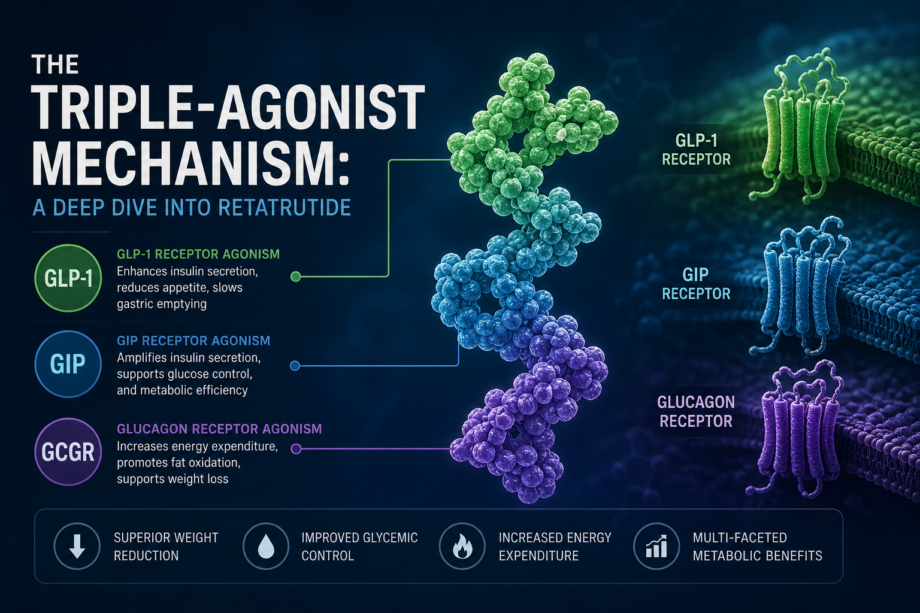
The Biochemical Synergy of Triple-AgonismRetatrutide represents a significant leap from dual-agonists (like Tirzepatide) by integrating a third signaling pathway. It is a 39-amino acid synthetic peptide that mimics the endogenous nutrient-stimulated hormones but is engineered for a prolonged half-life of approximately six days.
GIP Receptor Agonism: Research indicates that GIP signaling enhances insulin secretion and, crucially, may act on the CNS to improve the tolerability of GLP-1 agonism.
GLP-1 Receptor Agonism: This pathway remains the cornerstone of glucose-dependent insulinotropism and the inhibition of gastric motility.
Glucagon Receptor (GCGR) Agonism: This is the “thermogenic” component. By targeting the liver, it increases mitochondrial biogenesis and hepatic lipid oxidation. Unlike traditional glucagon, when balanced with GLP-1, it promotes energy expenditure without the risk of significant hyperglycemia.
Clinical Observations in Research ModelsRecent studies have shown that the “triple hit” on these receptors leads to a reduction in liver fat content by up to 80% in specific research cohorts. This suggests that Retatrutide is not merely a weight-loss reagent but a potent tool for studying Metabolic Associated Steatotic Liver Disease (MASLD).
ReferencesCoskun, T., et al. (2022). LY3437943, a novel triple glucagon, GIP, and GLP-1 receptor agonist for the treatment of type 2 diabetes. Cell Metabolism.Jastreboff, A. M., et al. (2023). Triple-Hormone-Receptor Agonist Retatrutide for Obesity — A Phase 2 Trial. The New England Journal of Medicine.